
Why the world's most discerning patients choose China.
For advanced cancer, complex cardiac disease, refractory neurosurgery, and rare conditions where outcomes depend on depth of expertise — China's leading centers warrant serious evaluation.
39%
Of new global oncology trial starts originated in China in 2024 — up from ~5% a decade earlier.
7+
NMPA-approved CAR-T cell therapy products (2021–2025) — second only to the United States.
Why China now warrants serious evaluation.
A decade of national investment has shifted what the leading hospitals can do — visible in trial starts, drug innovation, and surgical case-mix complexity.
In 2024, China originated 39% of new global oncology trial starts and contributed to roughly 30% of all novel innovative drugs worldwide — up from ~5% and ~1% a decade earlier. At West China Hospital alone, ~187,000 surgical procedures were performed in 2023, a substantial share rated Grade-IV — China's highest surgical-complexity tier.
China's clinical leadership is not new. In 1963, Shanghai's Chen Zhongwei performed the world's first successful hand replantation — the operation that defined modern microsurgery; high-intensity focused ultrasound (HIFU) ablation was invented in China in the 1980s. What is new since 2015 is the breadth and scale.
Cardiac surgery volume
Flagship centers, 2023 · annual procedures
World-leading single-center volumes
75,000+
Single-port VATS at Shanghai Pulmonary — the most of any hospital worldwide
7,000+
Complex neurosurgeries a year at Beijing Tiantan — world's largest program
5,000+
Proton + carbon-ion patients at SPHIC — world's largest single-center program
47,443
Moyamoya patients in a nationwide cohort — among the largest documented globally
World's largest
Pediatric liver transplant program (Renji Hospital, Shanghai)
Partner hospitals
Cardiac · Cardiovascular
Fuwai Hospital
18,874
Cardiovascular surgeries (2023) — world's largest single-center volume. 30-day mortality 0.4%; cardiovascular surgical mortality kept below 1% for 15 consecutive years.
Oncology · GI & Thoracic
Peking U. Cancer Hospital
210K+
Gastric cancer biobank samples with 20+ year follow-up. Led first phase-III RCT of laparoscopic D2 gastrectomy (JAMA, 2019).
Neurosurgery · Complex brain & skull-base
Beijing Tiantan Hospital
7,000+
Complex neurosurgeries annually — world's largest single-center program. Home to the Beijing Neurosurgical Institute (founded 1960, relocated to Tiantan 1982). National Clinical Research Center for Neurological Diseases.
The three institutions above anchor cardiac, oncology, and neurosurgery in the partner network — chosen to illustrate the depth-by-specialty pattern. The full network extends across oncology, hematology, transplant, structural heart, pediatric subspecialties, and rare-disease referral programs at internationally-accredited private hospitals and Grade 3A academic centers.
See the full network →Sources: 2024 Annual Report on Cardiovascular Health & Diseases in China · JAMA 2019 (laparoscopic D2 gastrectomy phase III RCT) · China International Neuroscience Institute.
Sources: CDE 2024 Annual Report · IQVIA Innovation in China 2024 · West China Hospital Outline 2024 · 2024 Annual Report on Cardiovascular Health & Diseases in China · Cleveland Clinic Department of Cardiovascular Surgery 2023 · National Heart Centre Singapore 2023 · Bumrungrad Hospital 2023 · Shanghai Pulmonary Hospital · Shanghai Proton & Heavy Ion Center · Miao et al., EClinicalMedicine 2021 (moyamoya) · Renji Hospital.

“Concentrated volume measurably narrows variance in surgical and post-operative outcomes.”
0.4%
Fuwai · 30-day mortality (15-year sustained)
Fuwai Hospital Cardiovascular Surgery Outcomes Report · 2023
Where China leads, not follows.
Two kinds of edge: standards China developed that the world has adopted, and a therapy menu often deeper — or reachable earlier — than patients can access at home.
China-developed standards, now adopted internationally.
A measurable shift: China is no longer only adopting global standards — it is beginning to set them.

Hematology · Stem-cell transplant
Half-Matched Stem-Cell Transplant — the “Beijing Protocol”
Prof. Huang Xiaojun's haploidentical (half-matched) stem-cell transplant protocol, developed at Peking University, is now an international reference for transplants performed without a perfectly matched donor.
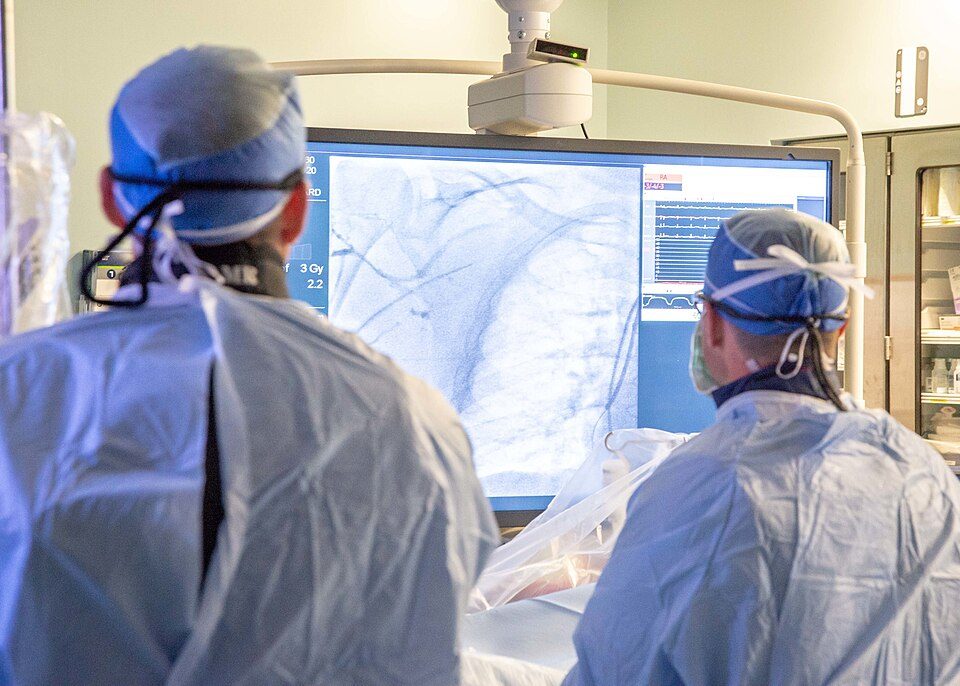
Cardiology
Minimally Invasive Catheter Procedure — PADN
Validated by Prof. Chen Shaoliang in Nanjing, PADN has entered international pulmonary-hypertension guidelines — among the first Chinese cardiology techniques to reach international consensus.
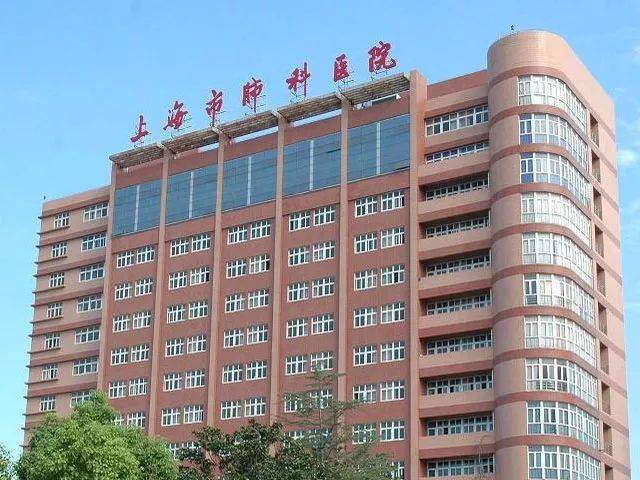
Thoracic Surgery · since 2014
Minimally Invasive Thoracic Surgery — SU-VATS
Pioneered at Shanghai Pulmonary Hospital in 2014, this minimally invasive approach is now performed at major thoracic centers worldwide.
Sources: Huang XJ et al., haploidentical HSCT (Beijing Protocol) · Zhang H et al., PADN-CFDA randomized trial, JACC Cardiovasc Interv 2022 · Shanghai Pulmonary Hospital (subxiphoid uniportal VATS, 2014).
Therapies you can reach in China
Category 01
Cell & immune therapies
Includes the world's first fully-human CAR-T for myeloma and China's first solid-tumor CAR-T — treatments that re-engineer a patient's own immune cells to attack the cancer.
For: Relapsed or hard-to-treat blood cancers — lymphoma, leukemia, myeloma — and some solid tumors.
Category 02
Therapy matched to your mutation
When a cancer carries a known genetic alteration, treatment is matched to that mutation rather than to where the cancer began.
For: Solid tumors carrying a targetable genetic alteration — across many cancer types.
Category 03
Next-generation drugs from China
Includes the first China-developed cancer immunotherapy to beat the long-standing global standard head-to-head in a lung-cancer trial (Lancet, 2025).
For: Advanced cancer patients seeking the newest regimens at the global frontier.
Category 04
Global drugs via fast-track access
Therapies already approved by the FDA, EMA, or Japan's PMDA but not yet registered in mainland China — including rare-disease and pediatric agents. Import cleared in 3–7 days.
For: Rare diseases or refractory cases where the needed therapy is approved abroad but not yet at home.
Category 05
China-developed medical technology
Advanced platforms now built in China — total-body PET-CT, surgical robots, and focused-ultrasound (HIFU) — increasingly meet US/EU standards, sometimes earlier and at lower cost.
For: Patients seeking procedures that use globally-validated Chinese technology not yet adopted at scale elsewhere.
Mechanism 01 · Domestic approval
NMPA approval pathway
Categories 01–03 are accessed through China's national regulator. Domestic frontier-therapy is no longer a follower indication — in many areas, NMPA approvals are now contemporaneous with or ahead of FDA/EMA.
Mechanism 02 · Special-access zone
Hainan Boao Lecheng
Category 04 is accessed through a State Council-authorized special-access pathway operating in Hainan Province since 2013 — nine designated hospitals, 200,000+ patient visits cumulatively (domestic and international combined). Patient-level import authorization in 3–7 days.
Sources: Huang et al., Clinical Pharmacology & Therapeutics 2025 · Lancet 2025 (ivonescimab) · China Food & Drug News, Nov 2025 · Hainan Provincial Government.
Therapy availability is matched to diagnosis case-by-case →

“Therapy matched to mutation, accessed through domestic approval or State Council special access.”
~520
International drugs & devices via Boao Lecheng · 2025
China Food & Drug News · November 2025
Cost and pricing structure.
China prices treatment against a domestic cost base — not against US list prices. Four structural drivers explain the difference; none are shortcuts on standards.
01
Manufacturing
In-country drug production eliminates import and distributor margins.
02
Procurement
National volume-based procurement reference-prices high-volume drugs.
03
Throughput
Higher facility throughput amortizes fixed costs across far more cases per year.
04
Compensation
Physician compensation is indexed to local cost of living.
| Treatment | US | Singapore | China | Savings vs US |
|---|---|---|---|---|
CAR-T Cell Therapy CD19+ or BCMA+ hematologic | $373–530K | $300–400K | $70–200K | Up to 85% |
Cardiac Bypass (CABG) Multi-vessel, inpatient | $78–123K | $40–80K | $30–50K | Up to 75% |
Knee Replacement Unilateral, all-in | $29–50K | $19–30K | $8–14K | Up to 75% |
Proton Therapy Full course | $150–200K | $30–90K | $45–55K | Up to 70% |
Lecanemab (Alzheimer's) Annual therapy | $26,500/yr | — | ~$8,970/yr | ~66% |
Nusinersen (SMA) Per dose | ~$125,000 | — | ~$5,180 | ~96% |
US benchmarks: CAR-T — FDA list prices, PMC12796026; CABG — Statista 2019 median & PMC9742101; knee — KFF 2024; proton — Wiley/JMRS 2024. China: Shanghai Proton & Heavy Ion Center; Tandfonline 2023.
JCI-accredited private hospitals — since 2005, China's first
Public Grade 3A academic centers — under 5% of all hospitals
Ethics, consent & trials aligned with ICH-GCP
Bilingual outcomes reports at flagship centers
Sources: Fortune Journals — JCI in Chinese Hospitals · NHC Statistical Bulletin 2023.
Compared with other destinations.
Thailand, Singapore, and China each specialize. Matching diagnosis to destination is the most consequential decision a medical-travel patient makes.
| Need | Thailand | Singapore | China |
|---|---|---|---|
Advanced / metastatic cancer Stage III–IV oncology, multi-modality regimens | ★ | ★★ | ★★★Leads |
Cellular & immune therapies CAR-T, NK, gene-modified cell therapies | — | ★ | ★★★Leads |
Complex cardiac & structural heart CABG, valve replacement, TAVI | ★ | ★★ | ★★★Leads |
Refractory neurosurgery Complex cerebrovascular, skull base, DBS | — | ★ | ★★★Leads |
Access to frontier therapies Trial-stage agents, tumor-agnostic targets | ★ | ★★ | ★★★Leads |
English-language continuity Native-English clinical and concierge | ★★ | ★★★Leads | ★★ |
Elective & wellness Cosmetic, dental, fertility, executive health | ★★★Leads | ★★ | ★ |
Cost efficiency Versus US list pricing | ~65% lower | ~45% lower | 60–80% lowerLeads |
For complex, advanced, or refractory disease — and frontier therapy access — China leads. For elective and English-default care, other destinations may serve a patient better.
All of this exists. Reaching it on your own does not.
The case for China is clear. Turning it into a real treatment — across language, jurisdiction, referral, cultural needs, and post-treatment continuity — is the work that remains.
How NF MediPath works.
We manage everything between deciding on China and being treated there — one clinical case manager, from first case review through follow-up with your primary physician. The five steps below show how.
01
Case submission
Secure upload of records and imaging. Initial clinical review within 48 hours.
02
Remote MDT
Multi-disciplinary consultation with partner specialists. Treatment plan and itemized quote delivered.
03
Travel & arrival
Visa, flights, VIP airport reception, private transport, accommodation for patient and family.
04
Treatment
On-the-ground case manager, real-time translation, daily updates, 24/7 concierge line.
05
Continuity of care
Discharge documentation in English/Arabic. Handover to the patient's primary physician. Scheduled remote follow-up.
<14 days
From case submission to confirmed treatment start at a partner hospital — Fast-Track Protocol, eligible cases.
Context: median US cancer diagnosis-to-treatment interval is 29 days (Khorana et al., PLOS One 2019). Fast-Track Protocol is a brand service commitment, not an industry benchmark.
— Across the journey
International patient services, integrated by design.
Language
English across all international-patient programs. Arabic and Russian coordinators at flagship centers. Real-time medical translation during all consultations.
Visa & logistics
Medical visa facilitation, invitation letters, flight booking, VIP airport reception, private transport, hotel and serviced-apartment accommodation for patient and family.
Cultural & dietary
Halal dining available at all partner hospitals. Prayer facilities, qibla direction in rooms on request. Gender-sensitive care, female physicians available. Ramadan-aware scheduling.
Family & continuity
Family accommodation integrated — patient suites designed for relatives. 24/7 concierge for medical, logistical, or personal needs. Daily progress updates to designated family contacts.
NF MediPath is the clinical access layer between international patients and China's complex medical system.
If your diagnosis is complex, your options should not be.
Submit your case for confidential review. 48-hour clinical response, no obligation.